Owning the store towns, and fighting for near me, across 3 dispensaries
Dispensaries can't run Google search ads. So for a 3 store dispensary in a crowded market, local search carries almost everything.
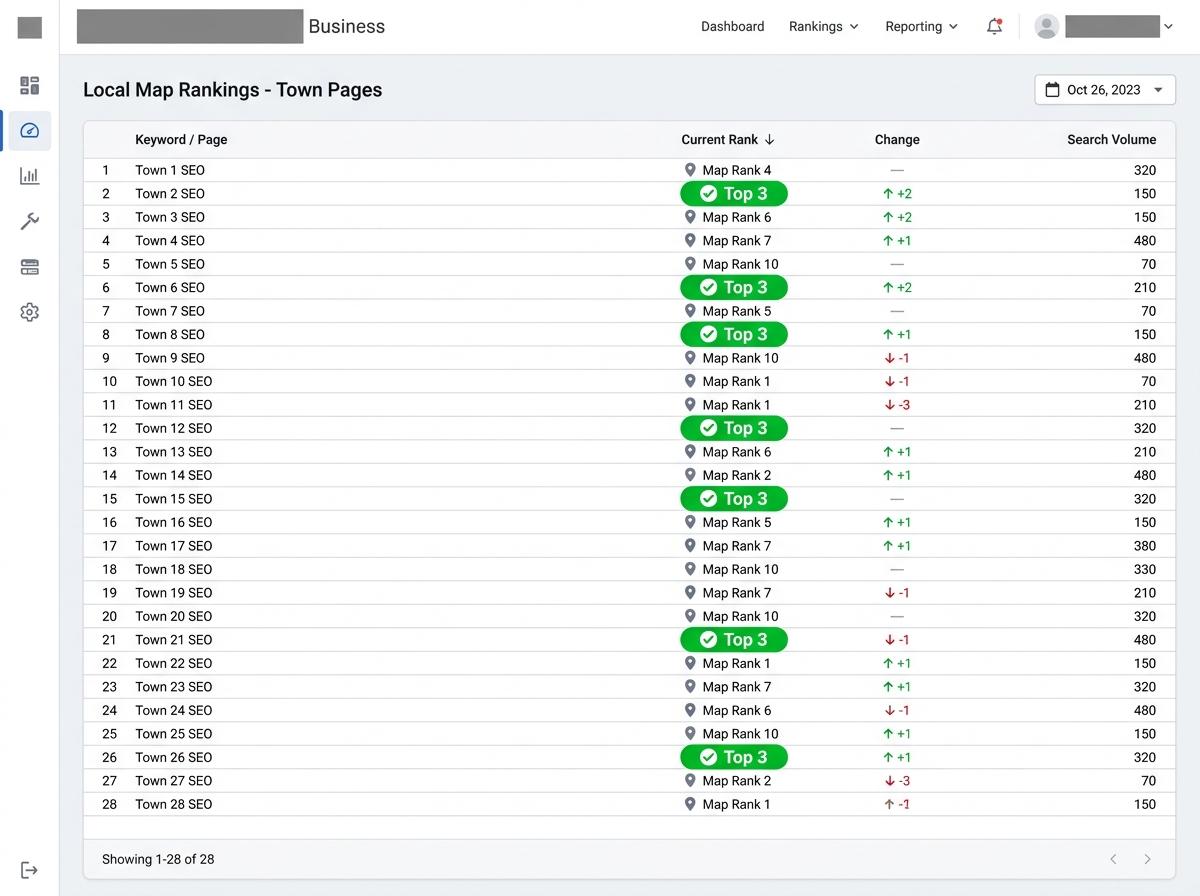
A 3 location dispensary in Massachusetts can't buy search ads, so local search does the heavy lifting. Every store now ranks #1 or #2 for its own town, and 7 of 28 surrounding town pages rank in the top 3. Broad near me searches are the part still being fought for.
The problem
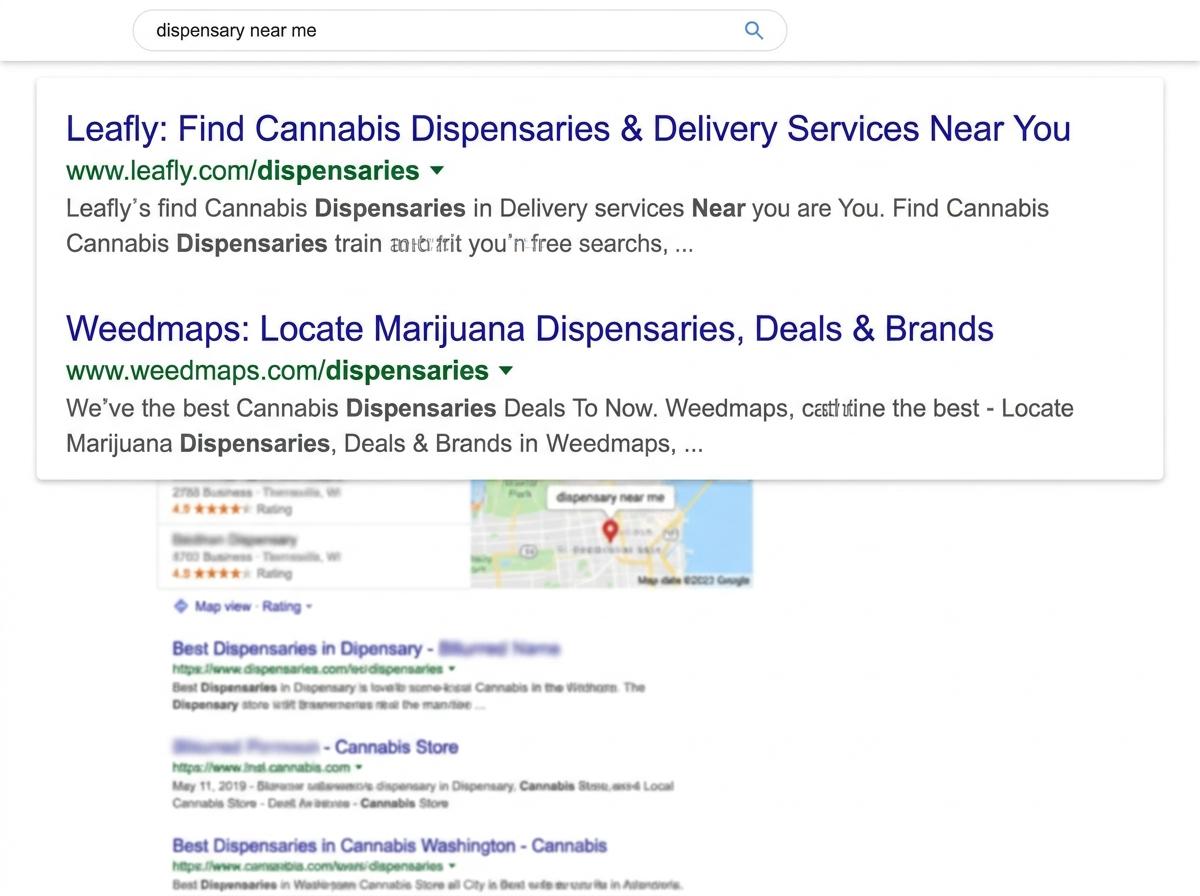
Dispensaries can't buy their way onto Google. No search ads, so the map pack and organic results do the work, while Weedmaps and Leafly sit on top of half the results.
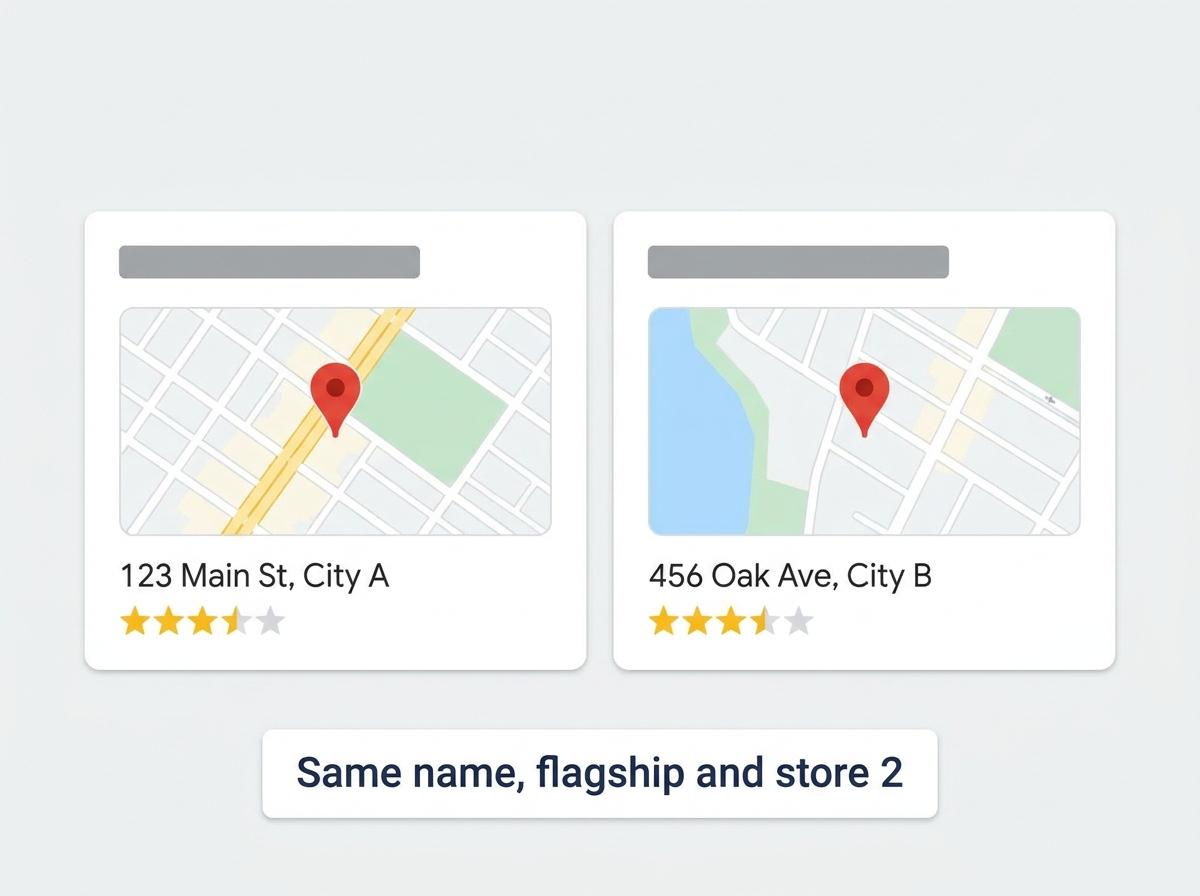
The client had three stores a short drive apart, and the flagship brings in about half of sales. Two of the three Google profiles had the exact same business name, so in overlapping areas they were showing up against each other.
What we found
The flagship and store 2 competed in the same searches.
The flagship had 1,562 reviews. Competitors beating it had 2,400 to 4,800, with two to four times the photos.
Stale ratings, a broken reference, duplicate business entities, wrong breadcrumbs.
Competitors served menu categories as real URLs. This menu only existed as parameters on location pages.
56% to 76% of their backlinks were spam and PBN links, so copying them was not the answer.
/locations/store?category=flower/flower/The plan
Lock down the store towns, spread into the surrounding towns with dedicated pages, then push the profiles into the wider map. Spend effort where it actually moves rankings, not where competitors were spending theirs.
- Store towns first, then 28 surrounding towns
- Fix the technical debt: schema, names, menu structure
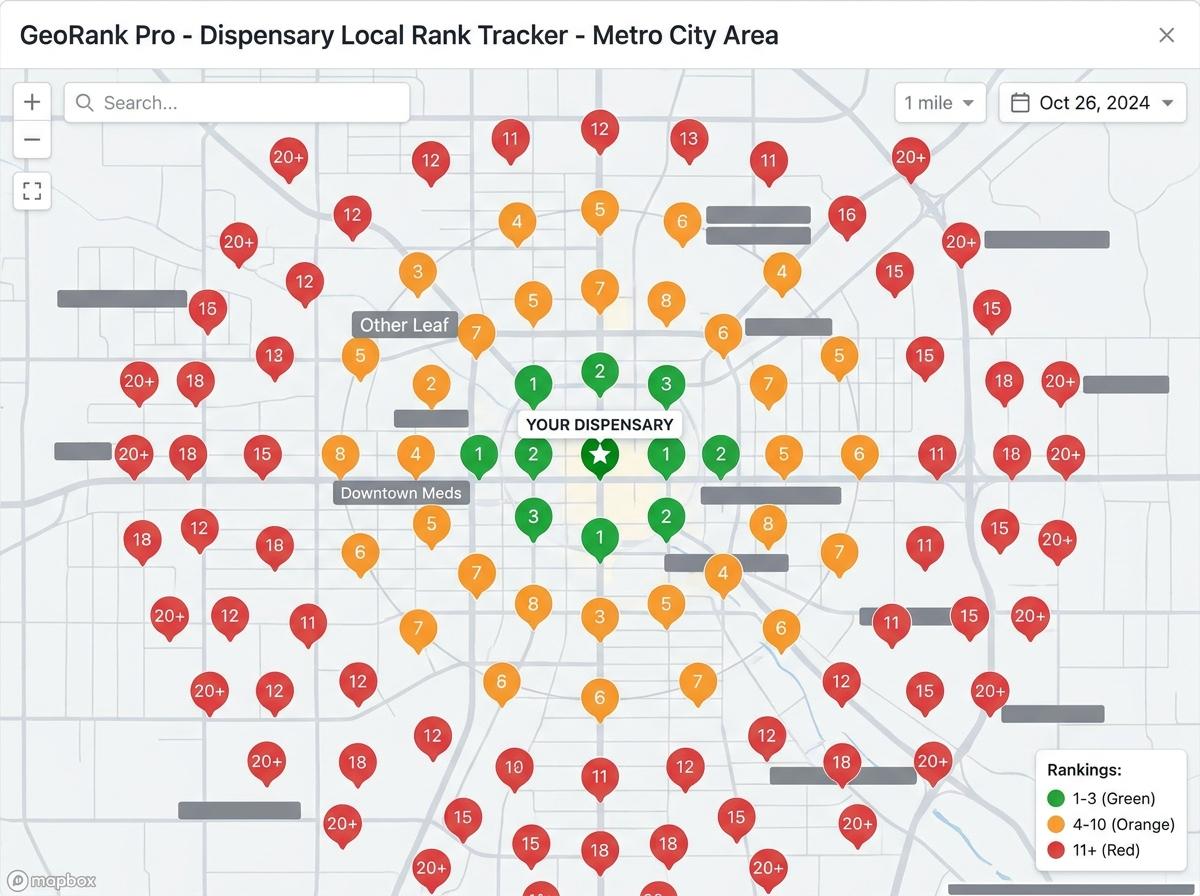
- Weekly grids to see what's really moving
How it rolled out
- Months 1 to 2Town page system
28 service area pages around the three stores, each with real local signals, linked into the right location.
- Months 2 to 3Citations
Cannabis specific and local directories built and cleaned up across all three stores so the business details matched everywhere.
- Months 3 to 5Schema and links
Store schema fixed across about 85 pages, breadcrumb fixes rolled out, links placed on relevant sites.
Rich Results Test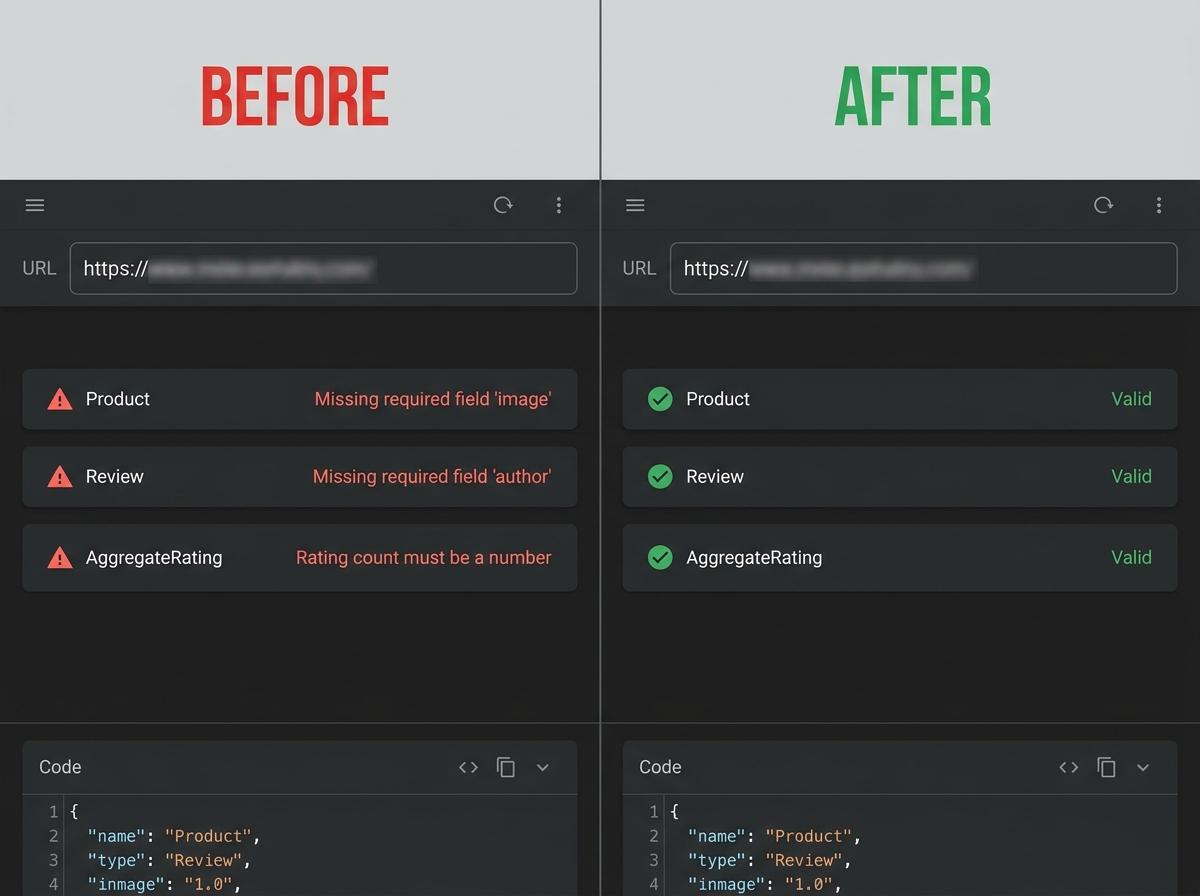
Schema before and after: errors to valid. - Months 5 to 6Map pack focus
Weekly grid tracking, profile category and description updates, competitor audits on menus, reviews and links.
- NowMenu structure
Moving the menu toward real category URLs, the clearest structural gap against the stores that outrank it.
Issues along the way
The parts most case studies leave out.
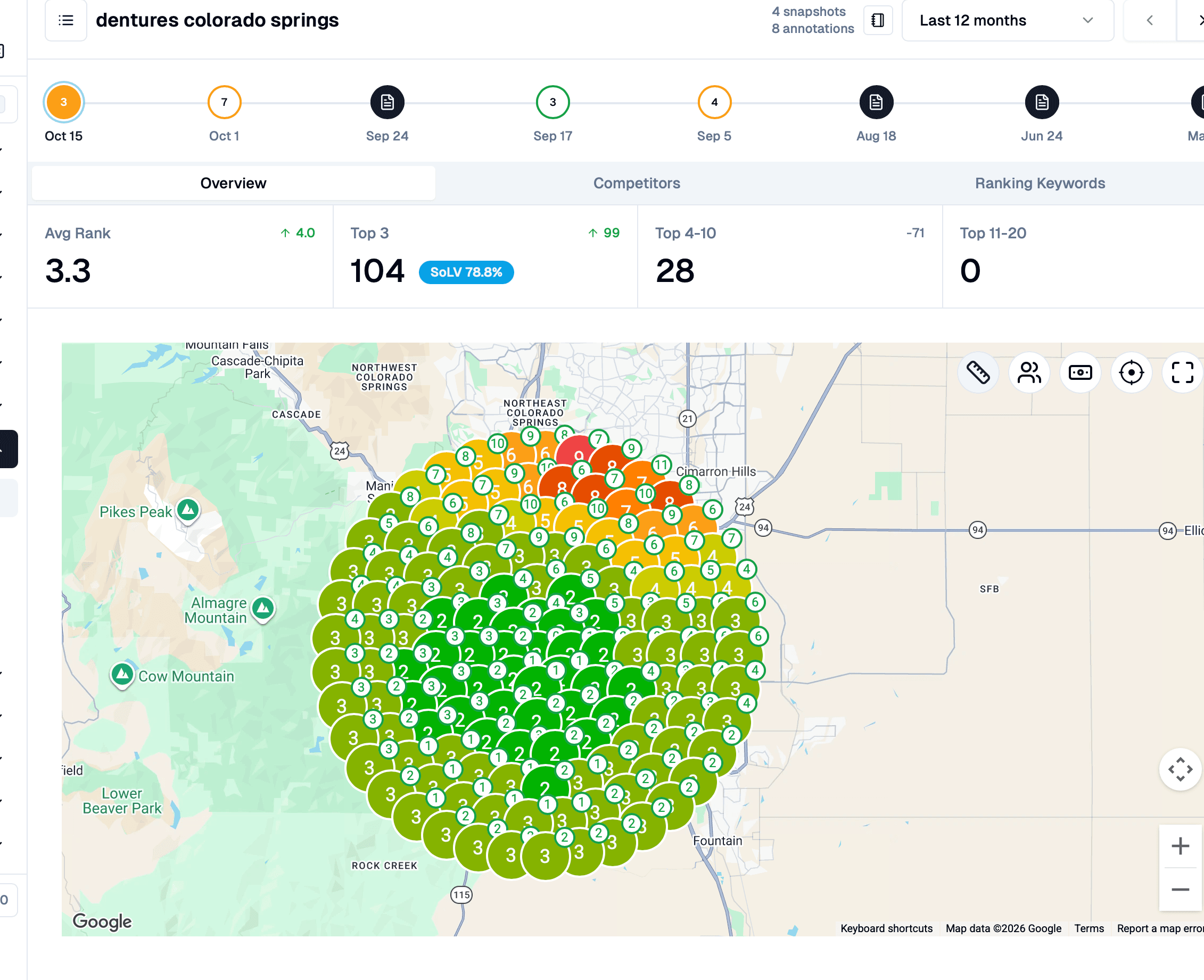
Dispensary near me averages around 6.9, just outside the map top 3. All three stores hold the top 3 within a few miles, then drop off.
One page lost rankings suddenly. Search Console showed it was isolated to one store's menu page, tied to competitor branded searches around a Google core update. The other store pages recovered on their own.
Calls dropped 20% in August while website clicks and directions went up. Most shoppers go straight to the online menu instead of calling.
No amount of on site work closes a 2x review difference on its own. We told the owner that straight.
Results
| Keyword or metric | Before | After |
|---|---|---|
| Store town searches (all 3) | NA | 1 or 2 |
| Town pages in the top 10 | NA | 15 of 28 |
| Town pages in the top 3 | NA | 7 of 28 |
| Neighboring town, map average | 11.5 | 6.1 |
| dispensary near me, map average | NA | 6.9 |
| Metric | July 2026 | August 2026 |
|---|---|---|
| Profile impressions | 24,858 | 25,777 |
| Website clicks | 21,967 | 22,703 |
| Directions | 2,393 | 2,678 |
| Calls | 498 | 396 |
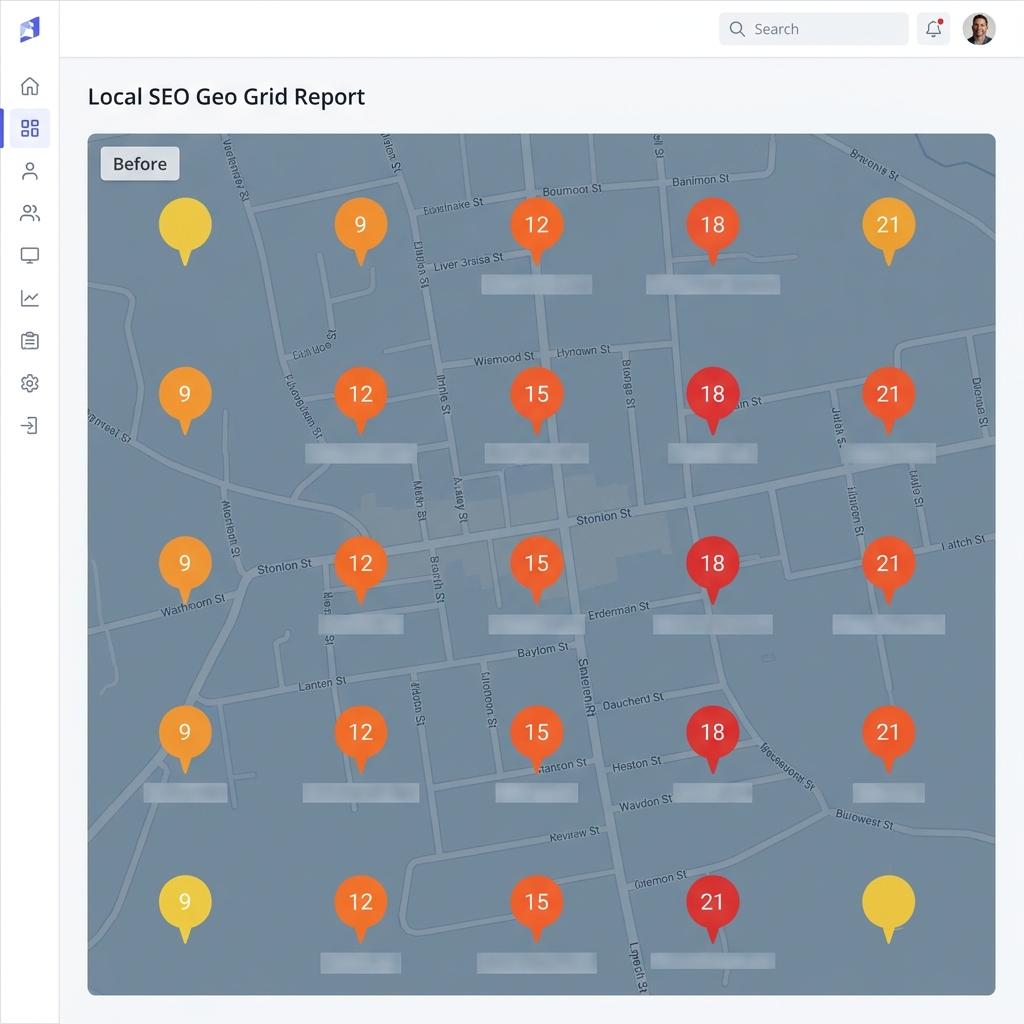 Before
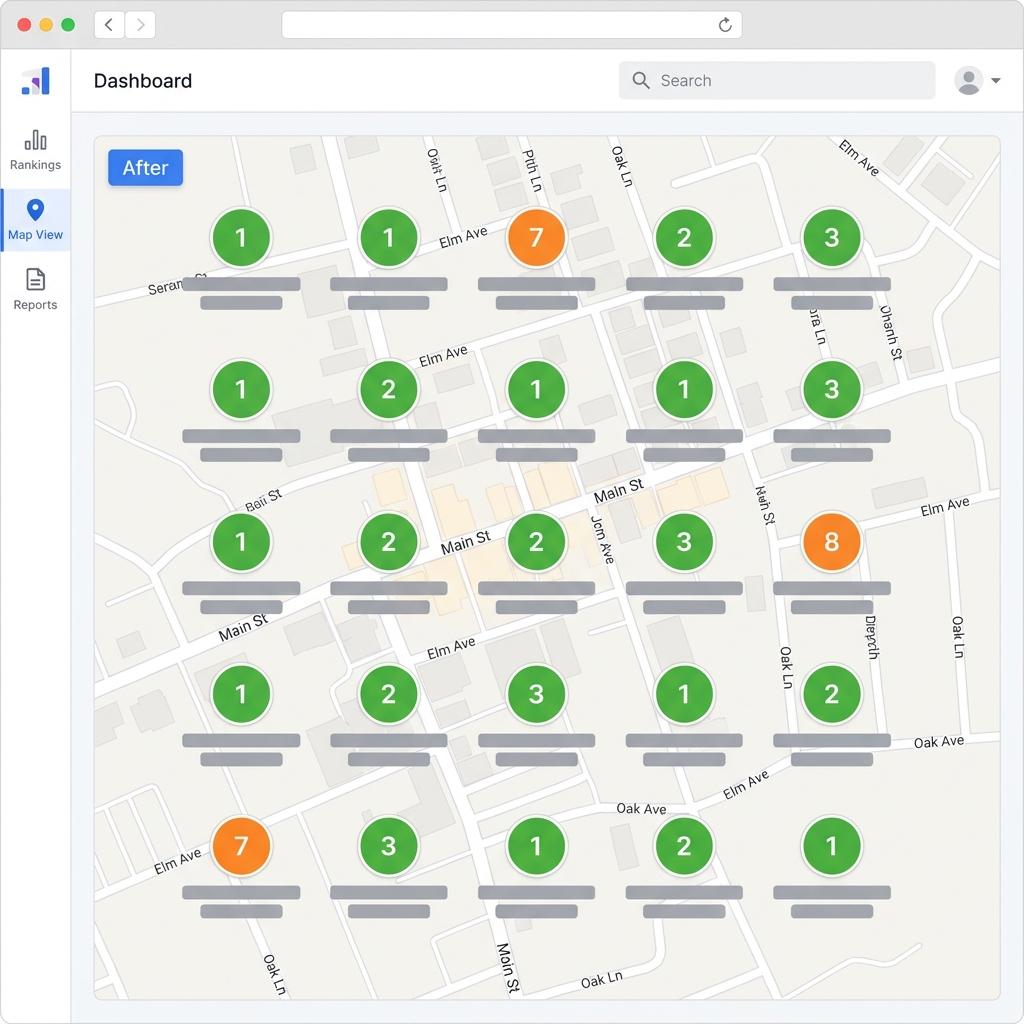
Your own town is the easy part. Near me is decided by reviews, photos and how close the shopper is, and in a crowded market that's a long game. Don't chase competitor backlinks, most of them are junk. Fix your profiles, your menu structure and your review pace first.
FAQ
Google doesn't allow cannabis dispensaries to run search ads, which is why local search matters so much in this niche.
Usually identical business names in overlapping areas. Google can't tell which one to show.
Not here. 56% to 76% of the competitors' links were spam. They ranked despite those links, not because of them.
It depends heavily on how close the searcher is, plus reviews and photos. Your town name is mostly about relevance, which you control.
Every location should own its own map. Does yours?
Send us your store locations. We'll map where each one wins, where it drops off and which competitor is taking the gap, then email you what we'd fix first.
Map my locations